
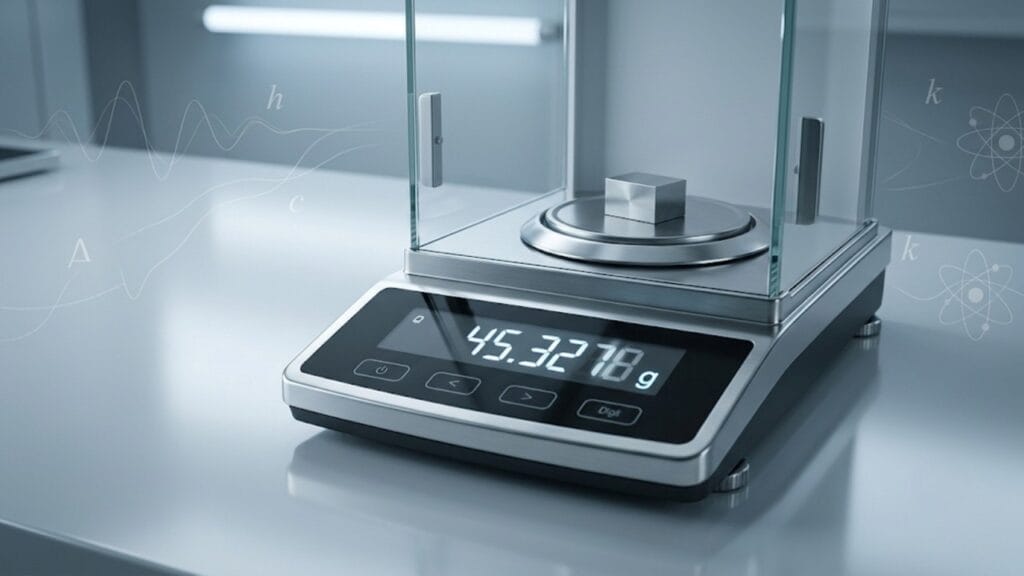
Measurement Uncertainty in Physics: What It Is and Why It Always Exists
Learn what measurement uncertainty is, why it always exists in physics, how to calculate and report it, Types A and B and how it propagates through calculations.
Learn what measurement uncertainty is, why it always exists in physics, how to calculate and report it, Types A and B and how it propagates through calculations.
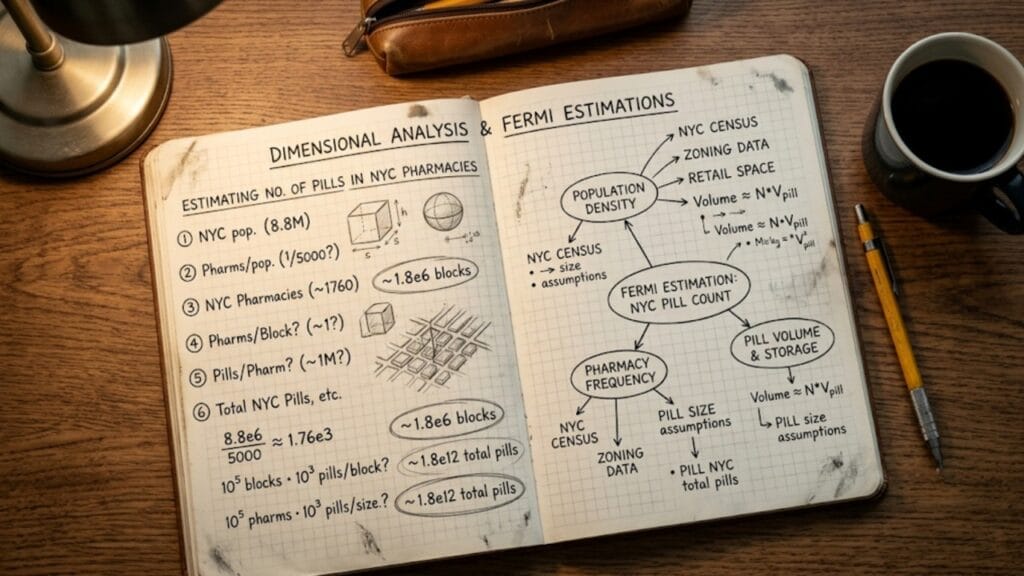
Learn Fermi estimation in physics — the step-by-step method for order-of-magnitude estimates with 8 fully solved problems, practice questions and the physics behind why it works.
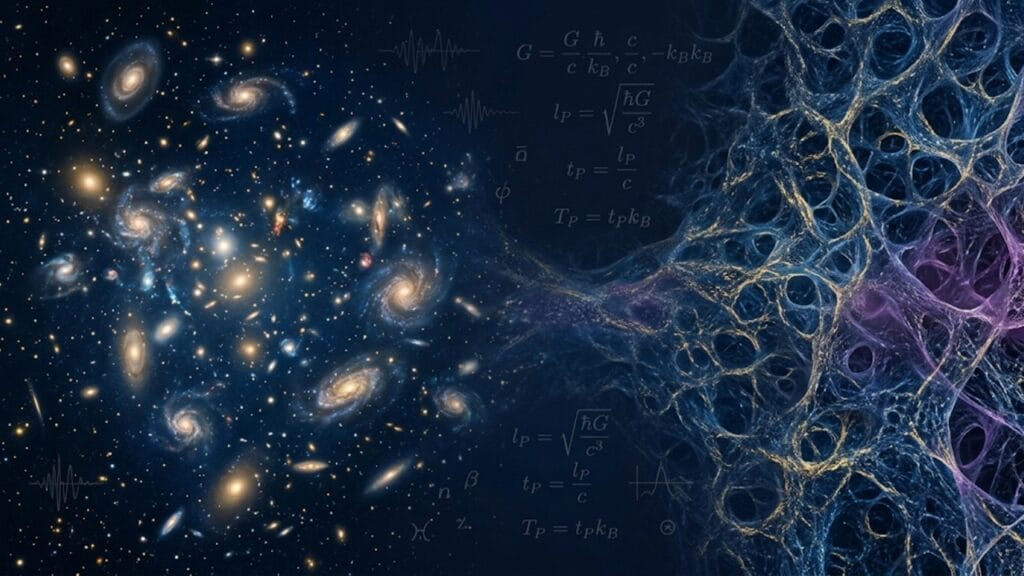
Learn what Planck units are, how to derive Planck length, time and mass using dimensional analysis, their physical significance and why they define the universe’s fundamental scale.
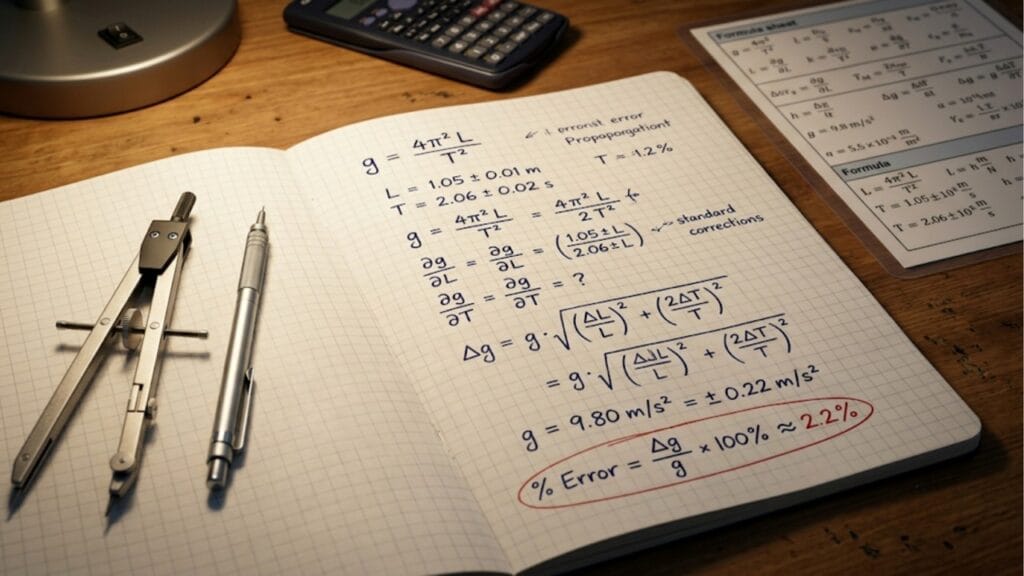
Learn all rules for error propagation in physics — sum, product, power and general formula — with full derivations and 8 worked examples for board and competitive exams.

Learn how the 2019 SI revision redefined all 7 base units using fundamental constants — Planck’s constant for kg, elementary charge for ampere, Boltzmann constant for kelvin.

Learn how physicists measure astronomical distances — from radar ranging and stellar parallax to Cepheid variables and Type Ia supernovae — with unit conversions and formulas.

Discover why the SI system uses exactly 7 base units — the physics behind each choice, why fewer won’t work, the 2019 redefinition and whether an 8th unit is possible.
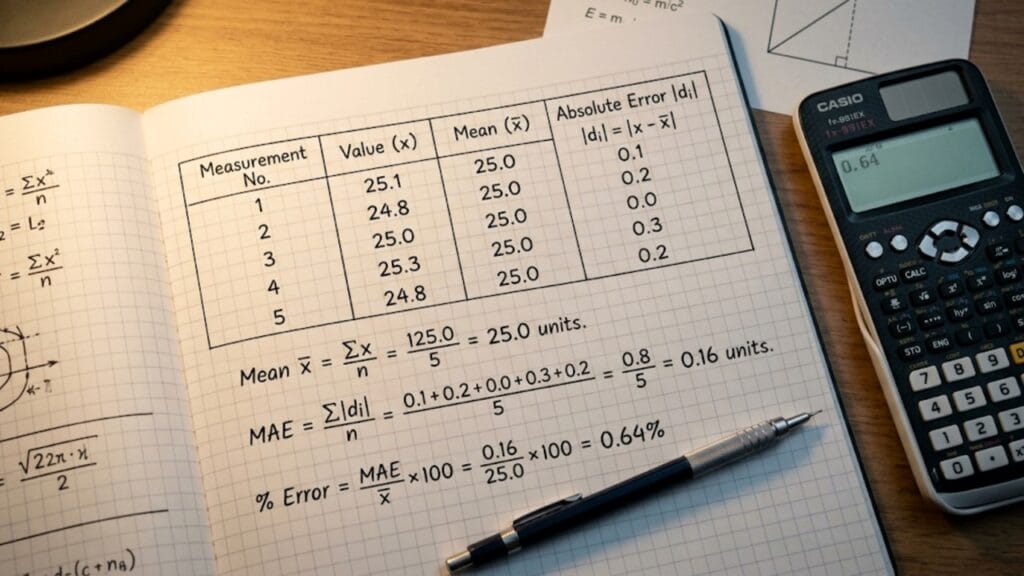
Learn absolute error, relative error and percentage error with formulas, step-by-step calculations, error propagation rules and fully worked examples for physics.

Learn the difference between accuracy and precision in physics — clear definitions, the four cases with data, real-world examples, error types and how to improve each.
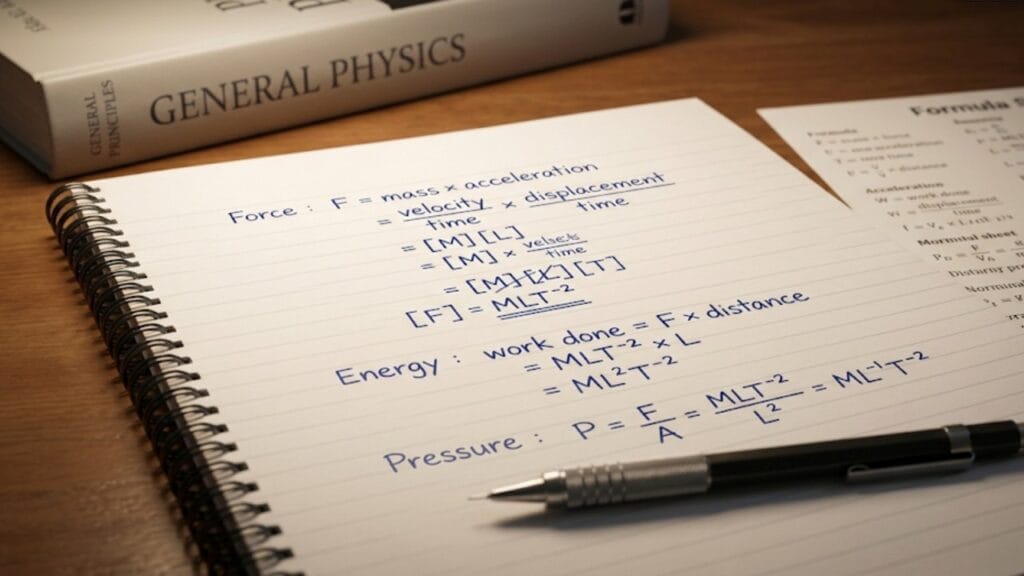
Learn what a dimensional formula is, how to derive it step by step for 25+ quantities and same-dimension quantity pairs.